Door open, restocking
A short spike, the compressor catches up and everything settles.
Normal: no alert
Smart alarm for fridges and equipment
A temperature alarm tells you it is too warm. Sentinella tells you why: it learns how each unit works and separates normal activity, faults and tampering.
For display cases, pharmacies, labs, server rooms, greenhouses and plants. See all uses
Why a threshold alarm is not enough
A threshold alarm reacts the same way to an open door, a fault and tampering. Sentinella reads temperature and compressor power together, compares them with the behaviour it has learned for each fridge, and works out which of the three it is facing.
A short spike, the compressor catches up and everything settles.
Normal: no alert
The compressor never stops, yet the temperature rises.
Fault: alert to the technician
At night the compressor stops while power is on, on several cases at once.
Attack: security alarm
| Aspect | Threshold alarm | Sentinella |
|---|---|---|
| What it watches | Temperature only | Temperature and power, against learned behaviour |
| Open door, defrost | False alarms, or a wide threshold that alerts too late | Recognised as normal, so the threshold can stay tight |
| Fault or attack | The same generic alarm, once it is already warm | Separate alerts, to the technician or the security lead, at the first signs |
How it is built
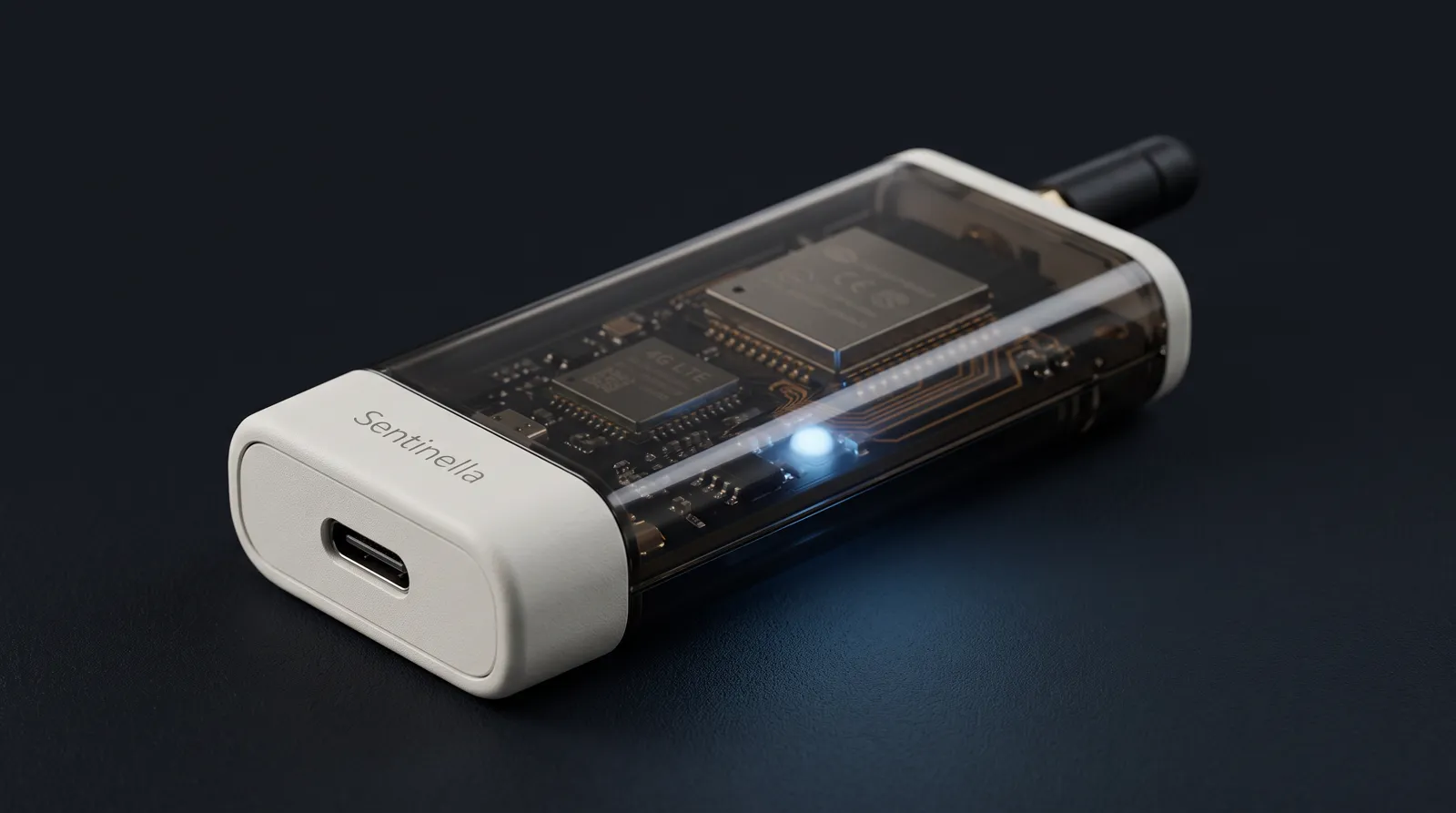
A hub the size of a USB stick, with a 4G modem and a battery, reads wireless probes placed in the equipment. The model runs on the device: the data stays there. Why it is hard to get around
In the first days it builds the normal profile of each unit: cycles, door openings, defrosts, workload.
No store Wi-Fi, no manufacturer cloud. If an attack comes through the network, Sentinella stays outside that network.
A fault goes to the technician, tampering to the manager. First a text, then a call, then the next contact.
Where it is used
The device is always the same: what changes is the probes connected and the normal behaviour the model learns.
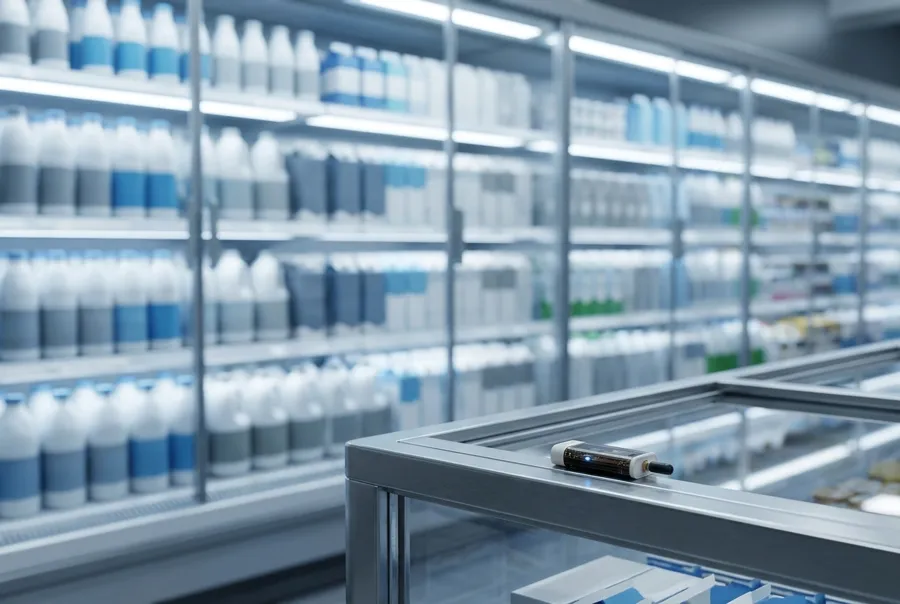
Probes: temperature, power
Display cases and cold rooms: an open door and a defrost are normal, a compressor switched off at night is not.
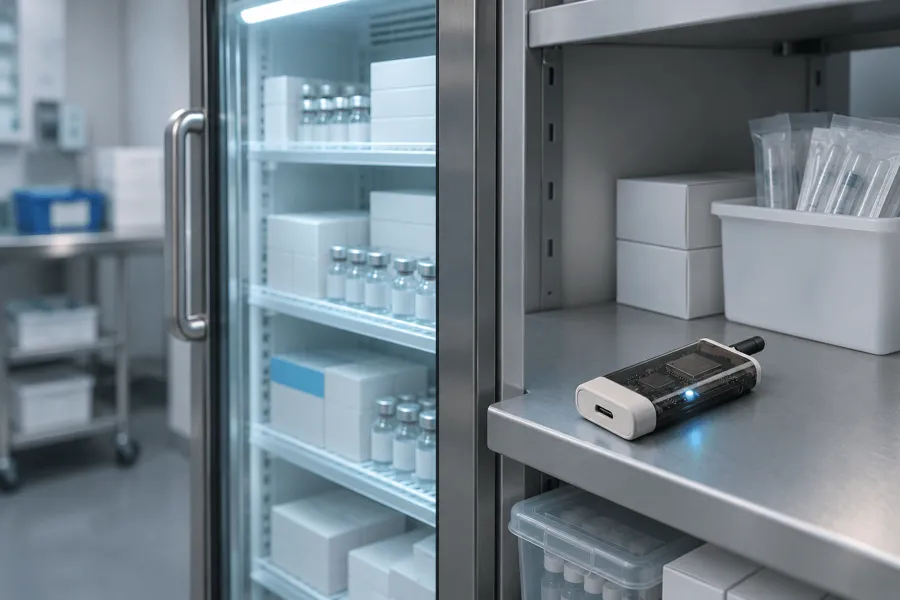
Probes: temperature, door
Medicine and vaccine fridges: alerts if the temperature leaves its range, even when the shop is closed.
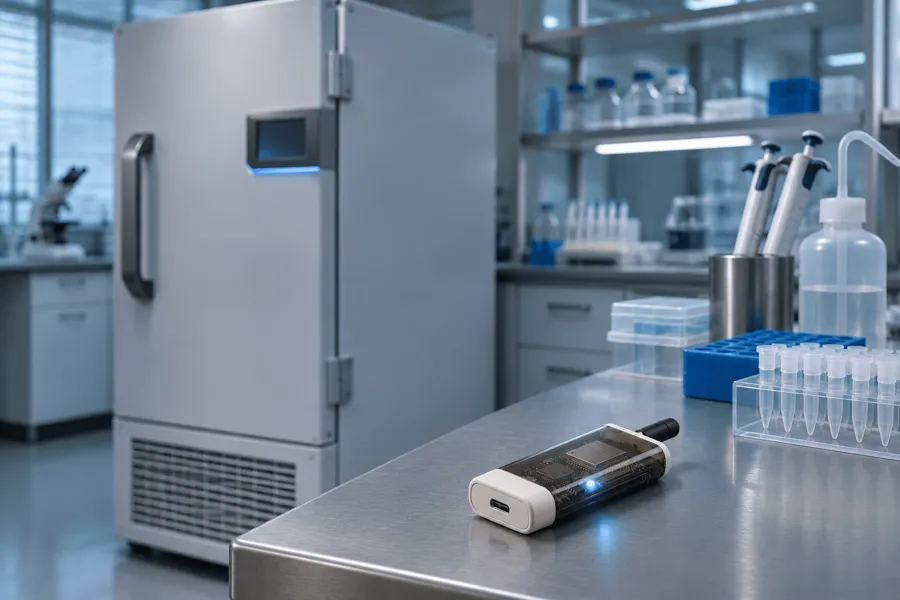
Probes: temperature, power, door
Freezers and incubators: it knows the duty cycle and flags a fault before samples are lost.
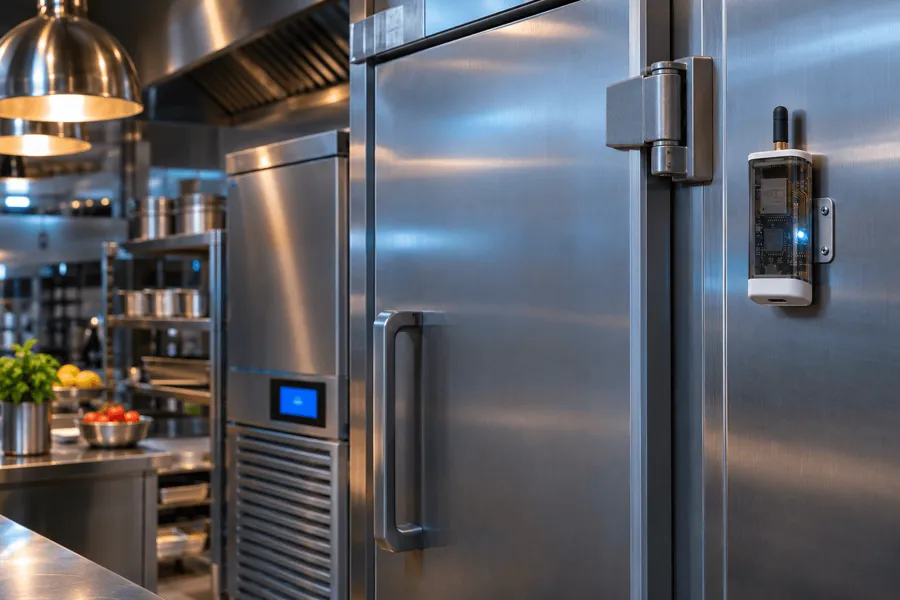
Probes: temperature, power
Cold rooms, blast chillers and freezers: it tells a busy service from a fault during the night.
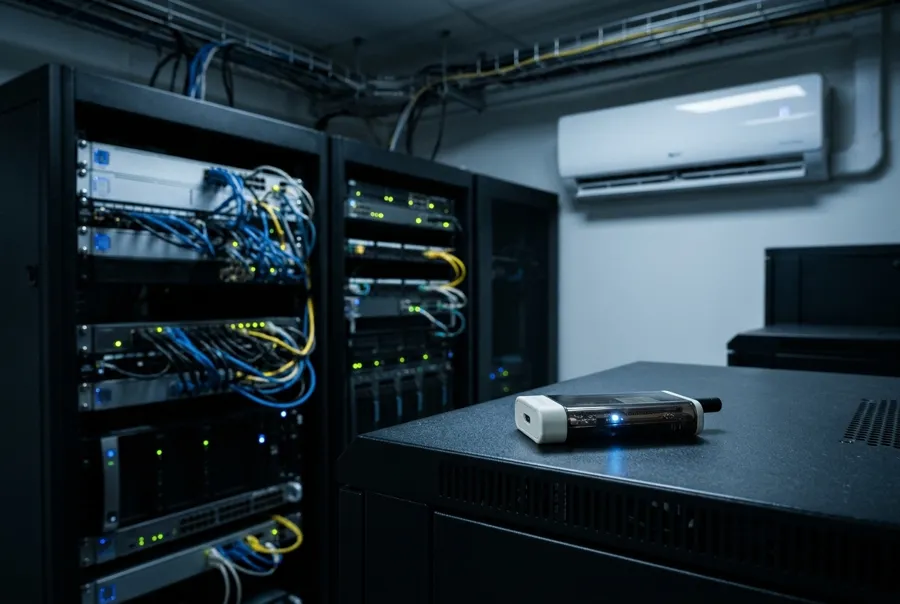
Probes: temperature, humidity, power
Cooling and switchboards: a load peak is normal, an air conditioner that stops for no reason is not.
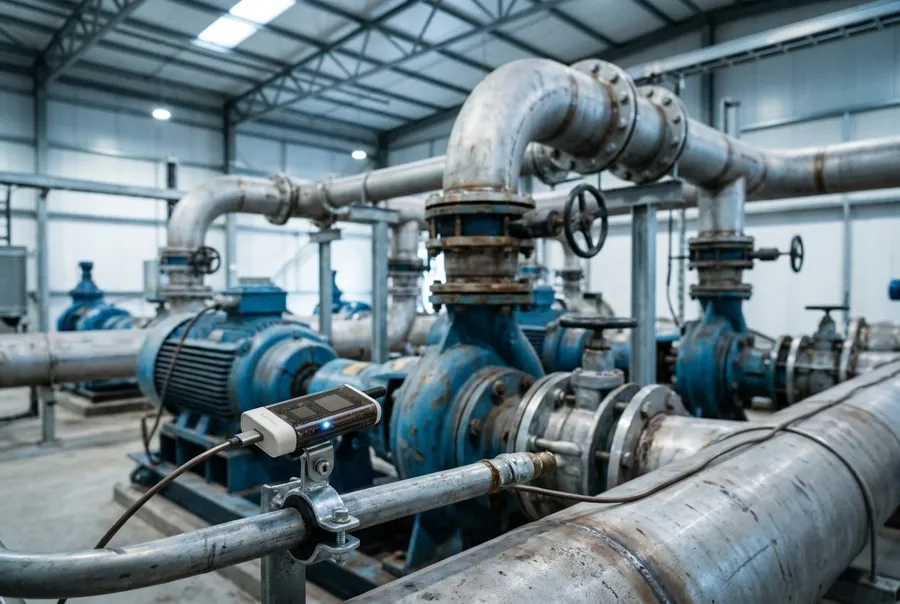
Probes: power, vibration, flooding
Pumps and tanks: it tells wear that builds up over time from a sudden, out-of-pattern stop.
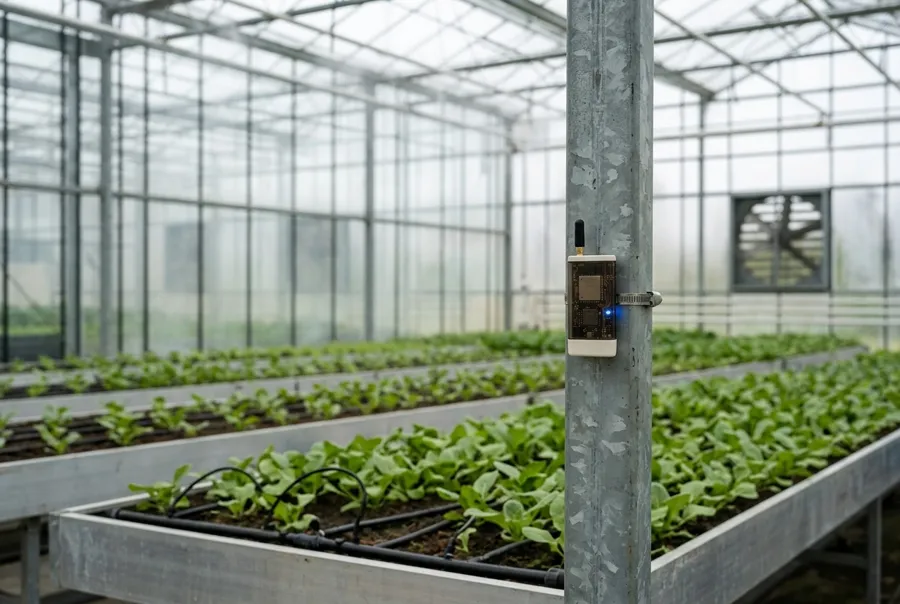
Probes: temperature, humidity, power
Heating, irrigation and ventilation: it flags abnormal cycles and out-of-hours activations.
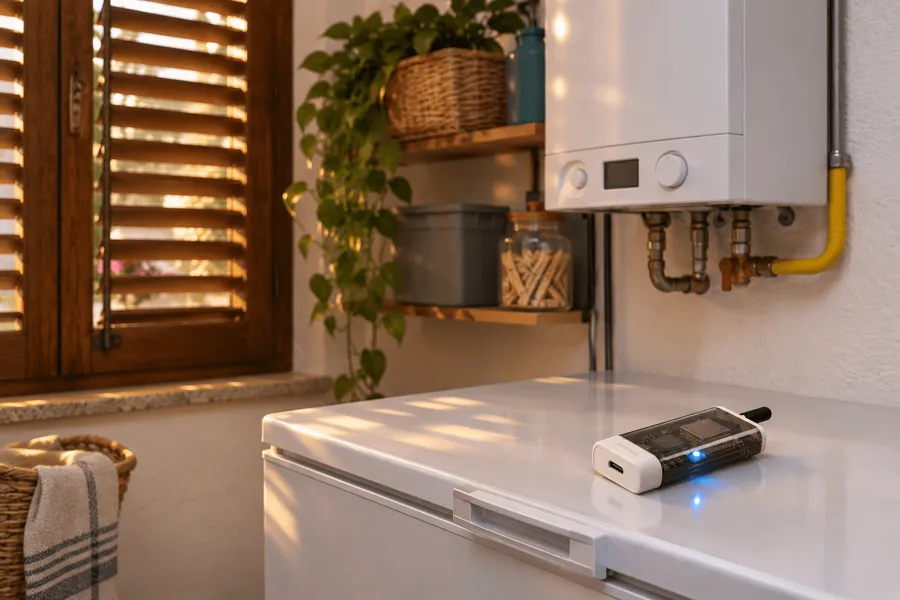
Probes: temperature, flooding, door, power
Boiler, freezer, water leaks: it alerts by text even where the house has no internet.
Installation
No work on equipment, network or fridges. A socket and a SIM are enough.
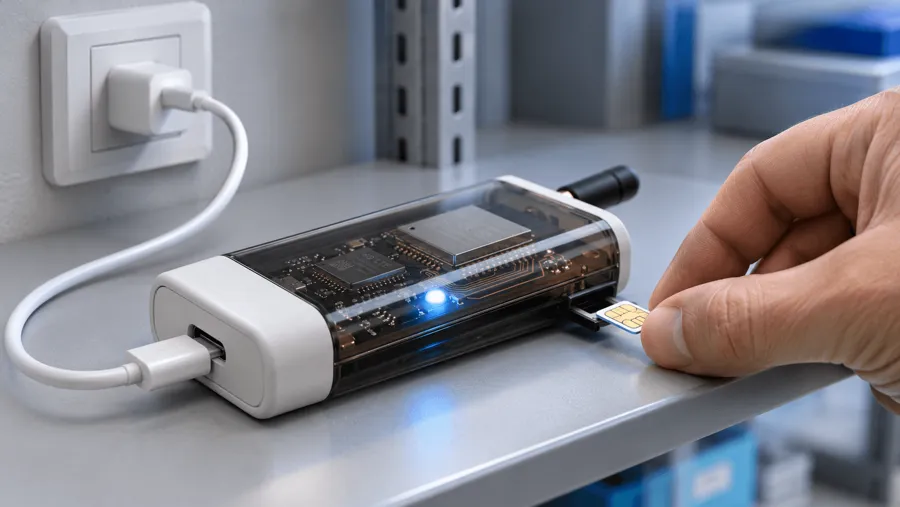
Insert the SIM and plug the hub into a socket.
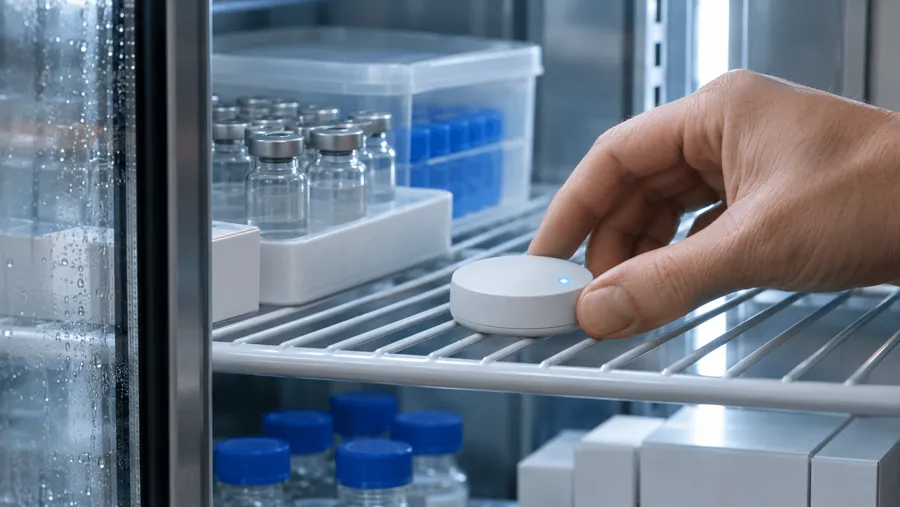
Put the wireless probes in the equipment you want to monitor.
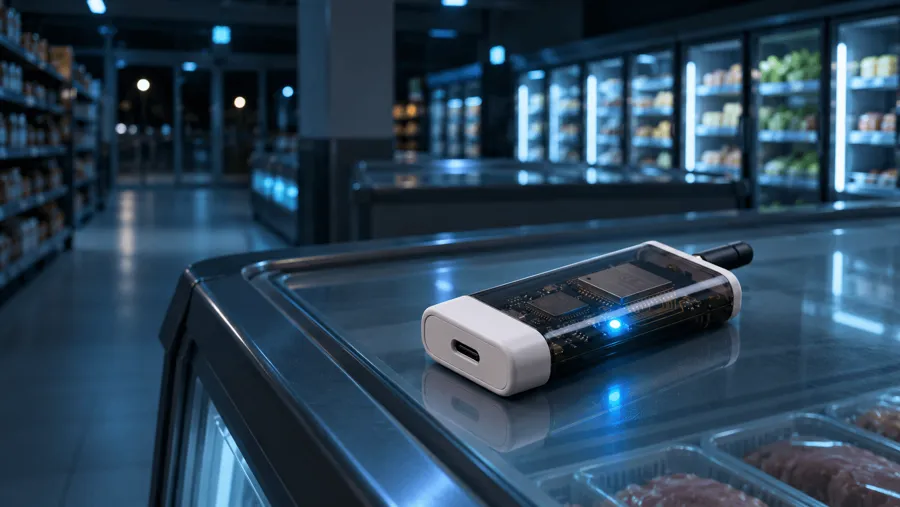
In the first days it learns how each unit works, then it keeps watch.
At a glance
Sentinella is an alarm system for fridges, cold rooms and equipment with a machine learning model running on the hub. It learns how each unit normally works and tells normal activity, faults and tampering apart: faults go to the technician, tampering to the manager, by text and phone call over its own 4G link.
| What it is | A 4G hub with a backup battery, wireless probes and an on-device machine learning model. |
|---|---|
| What it measures | Temperature, power draw, humidity, door opening, flooding, vibration, contacts from existing systems. |
| What it tells apart | Normal activity (door open, defrost, restocking), faults, tampering or cyber attacks. |
| How it alerts | A text, then a call, then the next contact, until someone answers. |
| Connectivity | Its own 4G cellular link: no store Wi-Fi, no manufacturer cloud. |
| Installation | No work on the refrigeration system: probes in the equipment, a clamp on the power line, the hub in a socket. |
| Uses | Supermarkets, pharmacies, laboratories, restaurants, server rooms, greenhouses, pumping stations, second homes. |
| Status | Prototype under development. Pilots are designed with the customer and are free in some cases. |
| Developed by | Angelo Pallanca, digital transformation consultant. |
Questions
Answers to the questions we hear most often. For anything else, write to us.
No. The wireless probes go inside the equipment, the clamp that measures power hooks onto the electrical line without disconnecting anything, and the hub uses its own 4G SIM: the refrigeration circuit is not touched and the store Wi-Fi is not used.
The hub has a backup battery and its own cellular link: it keeps watching and alerting during a power cut or when the store network is down.
It compares temperature and compressor power with the behaviour learned for each unit. A compressor that never stops while the temperature rises points to a fault; a compressor that is off while power is present, perhaps on several cases at once, points to tampering.
The contacts you choose: the technician for faults, the manager for tampering. First a text, then a call, then the next contact, until someone answers.
The model runs on the hub and the data stays there: it does not go through the equipment manufacturers’ cloud.
The pilot is designed with the customer: equipment to monitor, duration, expected results and commercial terms. In some cases it is free.
Sentinella is a prototype under development and we are looking for the first pilot sites. We design the pilot with you, in every respect: